
Concrete Driveways in Wichita Falls, TX
A driveway takes more abuse than any other slab on your property. It carries the weight of vehicles, sits on North Texas clay that swells when it is wet and shrinks when it is dry, and gets baked by the sun all summer. Get the base, the thickness, and the joints right and a concrete driveway lasts for decades. Get them wrong and you will see cracks and settled sections inside a few years.
We pour new driveways, full replacements, and driveway extensions. Whether you are pouring fresh on a new build or replacing a driveway that is past its prime, the work underneath the concrete is what decides how long the slab on top stays flat. The pour is the easy part. The base and the layout are where a driveway is made or broken.
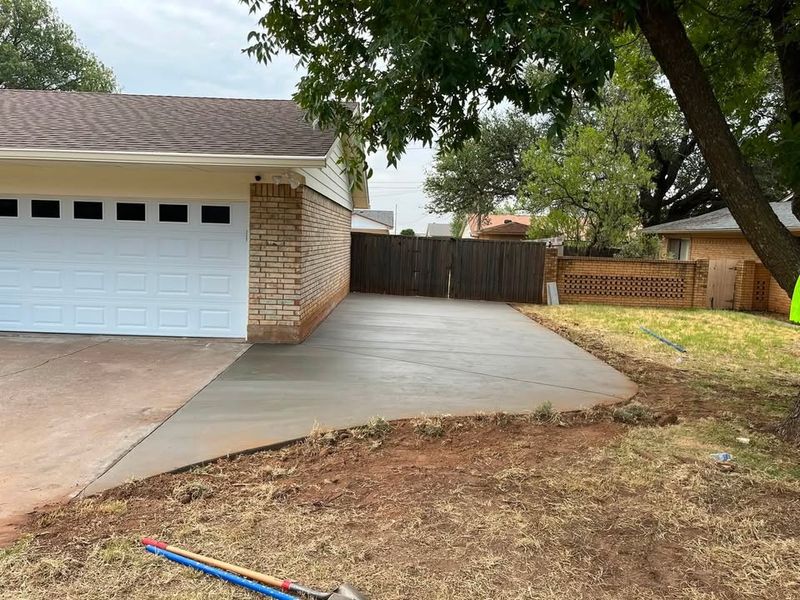
What the Job Involves, Step by Step
Site visit and layout
We look at the slope, the existing grade, and how water moves across the site. A driveway that funnels water toward the foundation or traps it in a low spot is a problem we sort out before we pour, not after.
Remove old concrete if needed
On a replacement, we break up and haul off the existing slab so the new driveway rests on a clean, prepped base instead of buried rubble.
Excavation and base prep
We cut to grade and compact the base. On our clay soil this is the single step that decides whether the driveway stays flat or starts to settle and crack. A slab is only as stable as what is under it.
Forms and reinforcement
We set forms to elevation and tie a steel reinforcement grid sized to the loads the driveway will carry. Reinforcement keeps the slab acting as one piece instead of breaking into chunks when the soil moves.
Pour to the right thickness
We pour to the thickness the traffic calls for. A passenger-car driveway and a driveway that sees heavy trucks or an RV are not the same slab, and the thickness and reinforcement reflect that.
Pour, finish, and cut control joints
We place the concrete, strike it level, and finish with a broom for traction. Then we cut control joints at the right spacing so the slab cracks where we want it to — in the joints — instead of wherever the concrete decides.
Questions to Ask Any Contractor About This Work
Texas does not issue a state license for concrete contractors, so the best way to vet a pour is to ask sharp questions. Print this list and use it.
How thick will the driveway be, and why that thickness?
What reinforcement are you using?
How are you prepping the base on this clay soil?
Where will the control joints go, and why there?
How do you handle the transition to the street and the garage?
What is included in demo and haul-off?
Concrete Driveways Gallery
Full Gallery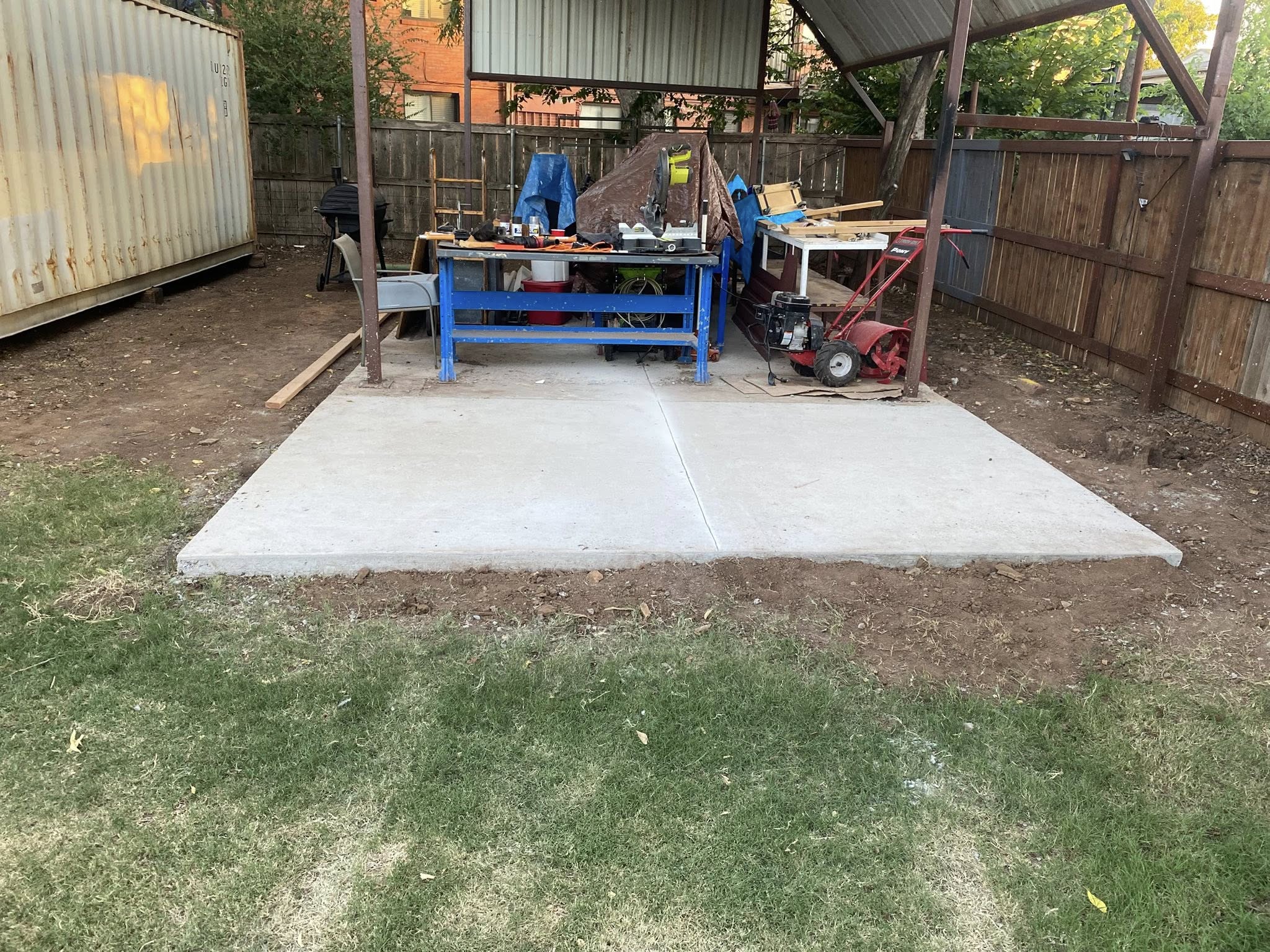
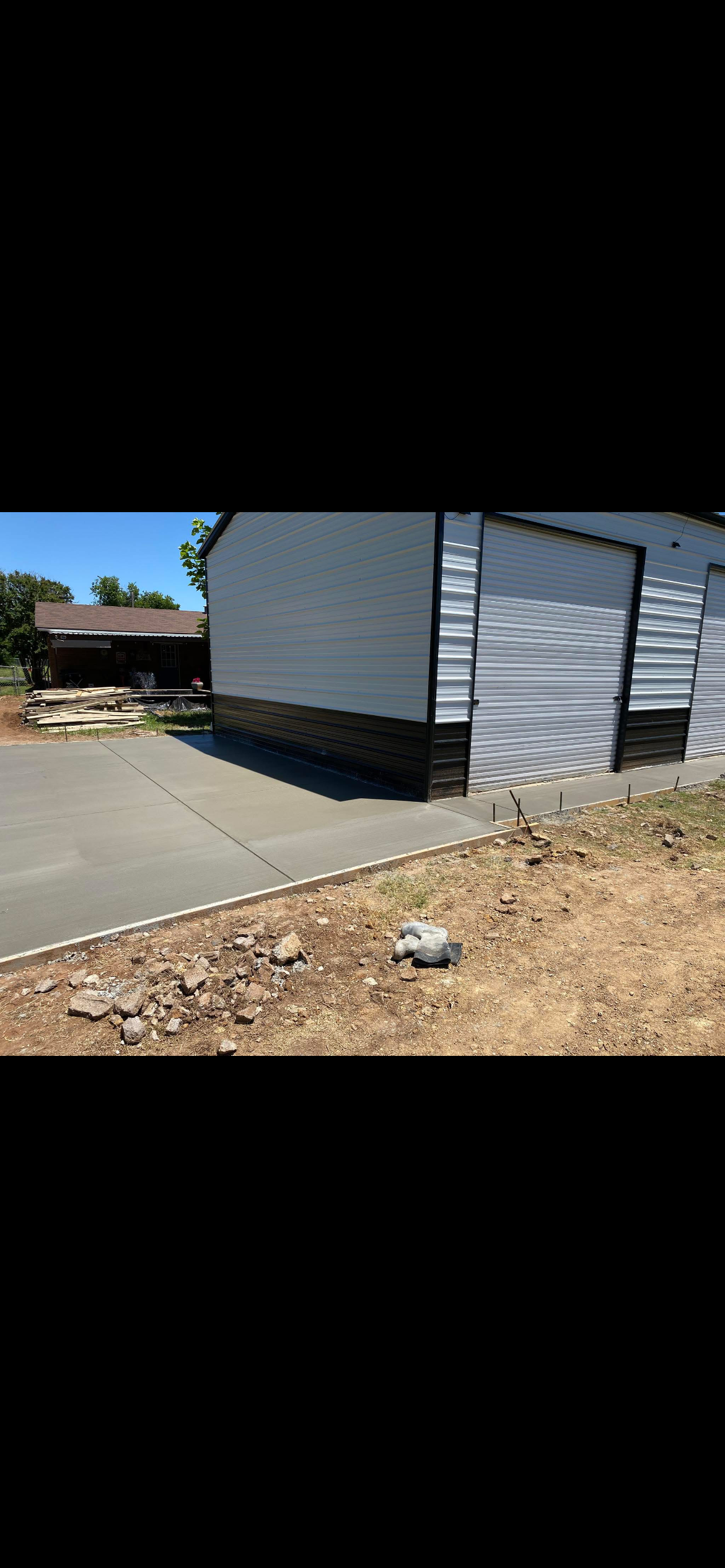
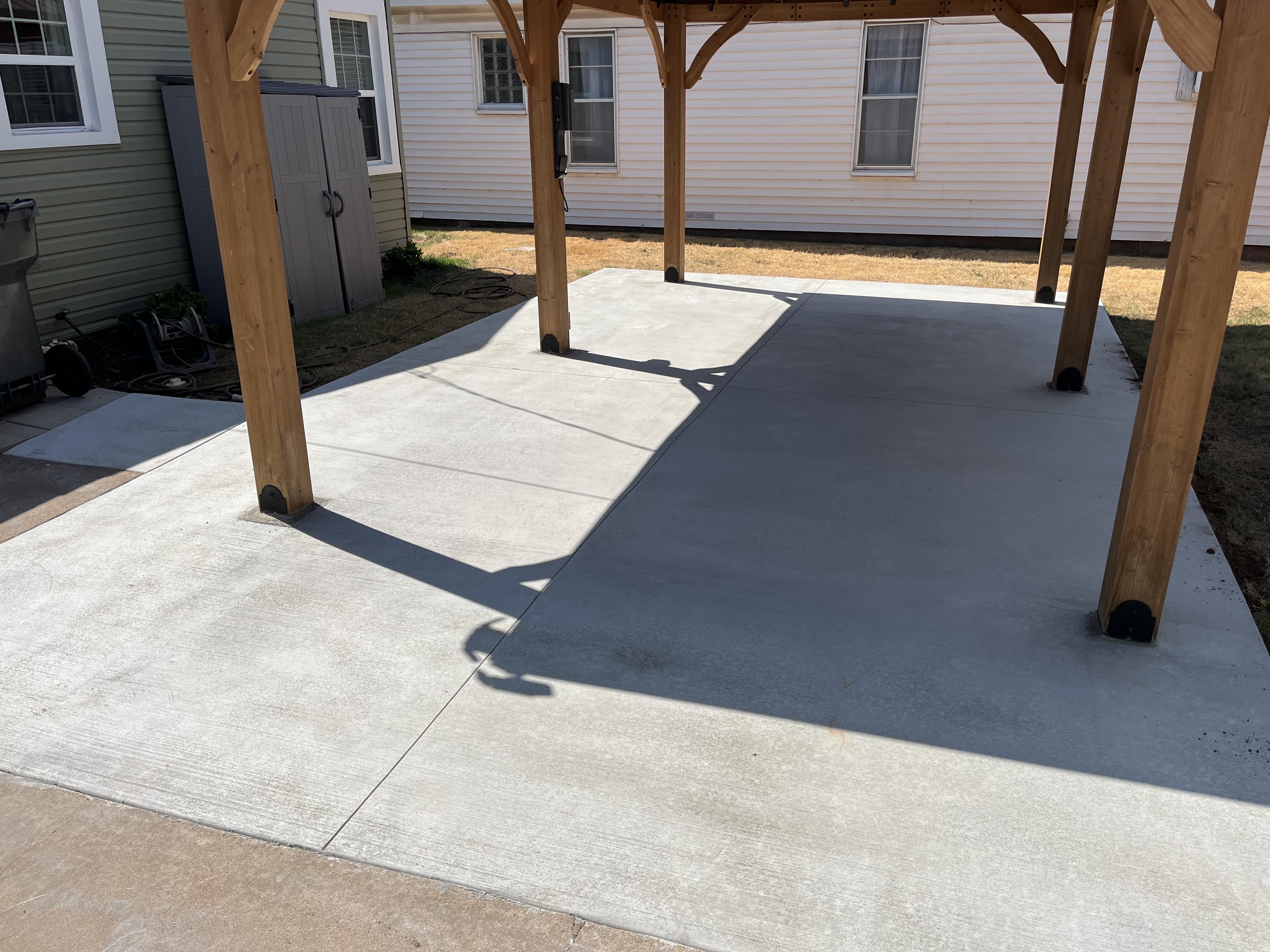
Towns We Serve
Based in Wichita Falls, we pour concrete driveways across Wichita County and the surrounding North Texas communities.
Pan and zoom the map to see the Wichita Falls area and the towns we serve across North Texas.
Concrete Driveways FAQs
How thick should a driveway be on North Texas clay soil?
A standard residential driveway is typically poured 4 inches thick for passenger vehicles. If the driveway will see heavy trucks, an RV, or commercial traffic, we go 5 to 6 inches and step up the reinforcement. Thickness is matched to what actually drives on it.
Why does the base matter more than the concrete?
Because concrete does not fail on its own — it fails when what is under it moves. North Texas clay swells when it is wet and shrinks in a drought. If the base is not excavated and compacted right, the slab on top goes along for the ride and cracks or settles. A strong slab on a weak base still settles.
How do control joints keep a driveway from cracking randomly?
Concrete will crack — the question is where. Control joints are deliberate weak lines we cut into the slab at planned spacing so the shrinkage cracks form inside the joints instead of across the middle of a panel. Right spacing and right placement are what keep a driveway looking clean instead of spider-webbed.
Can you extend my existing driveway?
Yes. We match the elevation and finish of the existing slab and place a control joint where the new pour meets the old so the extension looks intentional. A driveway extension is one of the most common jobs we do, especially when a family adds a second vehicle or widens a turnaround.
How long before I can drive on new concrete?
Foot traffic is usually fine after a day or two. For vehicles, plan on about seven days before you drive on it, with full strength coming at around 28 days of cure. We will give you the exact timing for your pour when we finish.
What causes a driveway to crack and settle?
Usually the base. Poor compaction, water getting under the slab, tree roots, or clay soil that swells and shrinks all put movement under the concrete until it cracks or drops. Poor joint layout is the other big one — without control joints in the right spots, the slab cracks where it wants to.
Other Concrete Services
See how we approach the rest of our work across Wichita Falls and North Texas.
Mon to Fri, 7 AM to 5 PM. Call or text (940) 500-0361.
Get Your Concrete Driveways Quote
Tell us about your project. We respond promptly with straightforward scheduling and pricing.
Ready to Talk About Your Concrete Driveways?
Call or text Taylor directly. Monday to Friday, 7:00 AM to 5:00 PM.